
The unwritten rules of the work trip
Leaders are watching how you travel. Here's what they're noticing.
CATEGORY
Credibility
LENGTH
6 min read
AUTHOR
Peta McGrath
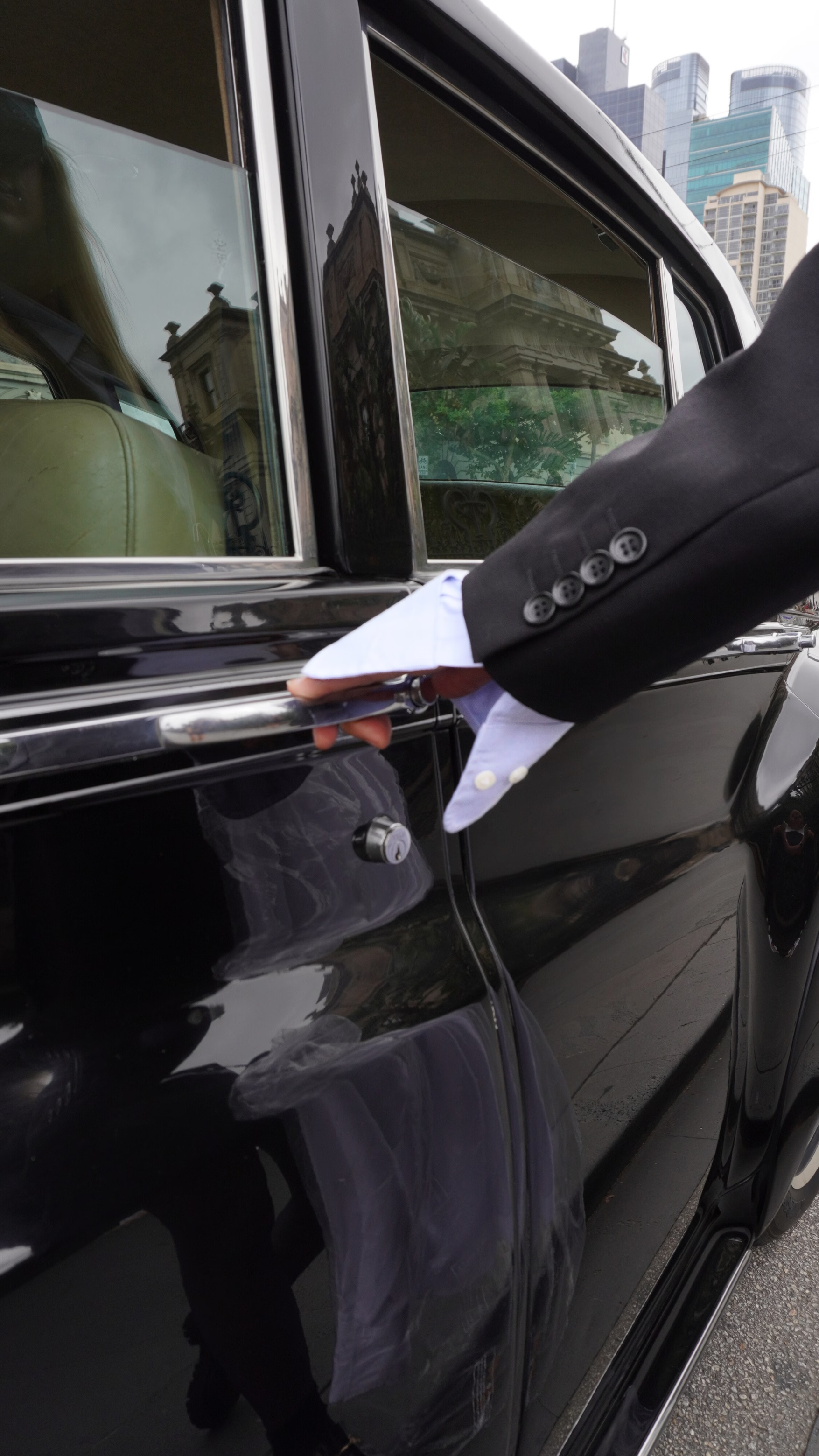
To be recognised as ready for more responsibility at work, you need to play the game properly. But the rules are often subtle and expectations aren’t shared.
On a work trip, these rules and how well you play by them are magnified. Leaders are observing how well you represent the organisation, how you carry yourself, and how people respond to you. These observations can pull your career forward or leave you in the same seat for too long. In this guide you’ll learn how to navigate the dynamics of work travel in a way that builds credibility and trust, and signals that you’re ready for more.
Your work trip starts before you leave
Packing well
What you wear forms part of your professional presence. It shapes the impression you make on others and can reinforce your professional image, or undercut it. On a work trip, you want to wear an elevated selection of your work clothes – particularly if you’re meeting clients.
Make sure you take outfits you’ve worn before. The morning of a client meeting is the wrong time to realise your shoes squeak or your skirt rides up when you walk with no time to find replacements. Where you can, pack clothes made from crease-resistant fabrics; hotel irons can be unreliable and they might damage your clothes.
Early in your career, most work trips are short, so you should make sure everything fits into your carry-on luggage. It's faster through the airport and it removes the risk of lost luggage before a client meeting. Pack strategically – remember that you may need to open your bag around your colleagues; in hotel lobbies, shared cars or airport security lines, so keep the contents organised and discreet.
Your work trip packing list
Skincare and beauty
- Skincare in small refillable containers so they don’t take up too much room
- Makeup – foundation, blush, bronzer, powders, eyebrow pencil, lipstick and gloss, mascara and brushes
- Hair brush and elastics
- Toothbrush and toothpaste
- Body wash in a small refillable container
- Deodorant
- Hair straightener or curler if you’re going to be away long enough that you’ll need them
- Eye mask in case your hotel room isn’t dark enough
- Medication
Clothing
- Outfits for work and any post work dinners
- Pyjamas
- Shoes
- Socks
Everything else
- Identification – hotels usually ask for this so take your licence or have your digital licence available
- Any print outs you may need for meetings
- Chargers for work and personal devices
- Laptop
- Mints for the plane and customer meetings
- AirPods
Good small talk is prepared, not improvised
Work trips inevitably involve small talk: in taxis, over breakfast, and at client dinners.
Some people are natural conversationalists who find engaging with others to be a rewarding endeavour that comes easily. Most other people have a more complicated relationship with small talk. However, doing it well is a skill that can be learned through preparation and practice. To be an engaging conversationalist when you travel for work, you need to prepare relevant talking points in advance.
Scan the arts and leisure sections of the news for events and updates that interest you. Look for exhibitions, film reviews, sporting events, travel destinations, and new book releases. Read the articles that interest you so you can speak to them for a minute or two.
You’ll also want to be up to date on any significant events in your organisation, your clients’ organisations, or the industry. Consider awards, papers released and mergers. Being able to talk to these events is important because if you want to get ahead at work, you need to demonstrate that you have potential beyond your current role. This means you need to speak about more than your current role. You need to show leadership that you have an interest in, and understanding of, the environment and landscape your organisation is operating in.
Small talk invariably gets personal so have a thoughtful answer ready for ‘what are you up to this weekend?’ Consider a response that reflects your interests without oversharing. Vague answers can read as either evasive or dull, neither of which you want.
Know the policy before you need it
Most companies have a travel policy. Make sure you’ve read and understood it. It should outline what’s expected of you; from keeping receipts to requesting reimbursements. These are the kinds of things that can cause issues later, so if your company doesn’t have a travel policy, discuss your questions with your manager before you leave. It’s much better to have a short discussion beforehand than a longer one when you return.
Confidence is built by doing
Work trips require confidence – it’s expected that you’ll network and contribute in meetings, even if you’re the most junior attendee. You don’t need to talk too much, and you should only speak when you have something to say, but being able to offer a perspective or develop a connection with a client builds your credibility and signals readiness for more responsibility.
Confidence is built by doing, so if you already know that unhelpful thoughts stop you from speaking up or putting yourself forward, enrol in the LDR Professional Confidence program before your trip. You’ll learn and apply strategies to manage unhelpful thoughts, and build the ability to take confident action despite nerves, pressure, or self-doubt. Join the Signature Program tier and let us know that you’re travelling for work to receive personalised, work-trip specific feedback and advice.
Agree your workload before you leave
Work trips often have a rhythm: meetings and events during the day, an hour or so back at the hotel and then a dinner. Most people use the time back at the hotel to catch up on emails – but you won’t be able to respond to them all, so you’ll need to check in with your manager before you leave. Do they expect you to keep an eye on emails or would they prefer you put an out-of-office on? Are there any deadlines you’ll need help managing? Make sure you understand your manager’s expectations around your existing workload before you leave.
Credibility is built in the details
You're being observed before you board
You should dress professionally around your colleagues – even when you’re flying so don’t wear anything casual to the airport.
If some of your colleagues do wear casual clothes at the airport, instead of doubting your choice to dress professionally, consider whether those colleagues now appear more or less credible to you. While you can’t control how people perceive you, you can control the image that you project through the way you present yourself. And if you want to get ahead at work, that image should be professional.
Note: When we talk about dressing professionally, we don’t necessarily mean pants and a blazer. Every workplace has its own version of acceptable work attire. Professional clothing just means what you would ordinarily wear to work to look polished and professional. By casual, we mean clothes that you would not ordinarily wear to the office.
The flight is a chance to build relationships
Should you talk to your colleagues on the plane? If you aren’t working on the plane, then generally yes. It’s usually expected and can read as slightly awkward if you don’t engage. If you’re seated next to your manager or a senior leader, use the opportunity to your advantage. Ask them about their career, the direction of the organisation, what’s on their mind this quarter. Share your own insights and achievements too. Just remember that they may wish to work on the flight, so watch for signs that they’re winding up the conversation, like reaching for their laptop or headphones.
If you’re seated with a peer, take the opportunity to build a professional relationship. Learn about their team, the work they produce and look for any synergies between you.
At all times be cognisant of the topic of conversation and the people around you – keep it professional and avoid discussing anything negative or sensitive about your workplace. If the conversation veers into your personal life, be mindful of what you share. It’s okay to mention that you have a partner, less so to share that you’ve been having relationship issues.
Presence counts as much as what you say
Etiquette matters – if you’re attending meetings, smile, introduce yourself and make others feel at ease. If you’re seated when people are about to be introduced, stand up for the introduction and shake their hand. Standing establishes your presence, it’s easy for people to ignore you if you don’t stand.
In meetings, sit up straight, listen and have a pen and notebook ready to take notes if appropriate. You can use your laptop instead, but only if everyone else is – the sound of typing can irritate people. Keep your laptop closed unless you’re taking notes on it, otherwise it can be distracting, and looking at your laptop, instead of the people speaking, can make you appear disengaged.
Even if you aren’t speaking, follow the conversation closely enough that you could offer a thoughtful response or insight if asked. If you’re put on the spot, a brief, considered answer is better than a long-winded one.
Debrief with your colleagues after client meetings and don’t wait to be asked for your opinion – share your insights and ideas for next steps.
Introductions are more than a formality
An introduction is an impression. People decide whether they like and trust you quickly, and once those decisions are made they’re slow to change, which is why the way you introduce yourself is worth getting right.
Pay attention to how people introduce themselves – repeat their name back to them to help you remember it, and don’t use a nickname if they haven’t introduced themselves that way. When someone introduces themselves to you, make sure you respond with your name, and depending on the context, your role or the company you work for. If you just respond with hi, it can make you appear shy or standoffish – which can make building a connection or starting a conversation more difficult.
If you know you’re about to meet people at the beginning of a meeting, or before the conference starts, keep your right hand free so you can shake hands. You don’t want to be juggling your things or have a wet hand from holding a drink. Some people won’t want to shake your hand for cultural or health-related reasons. If they don’t respond to your hand, just put yours down. The other person should acknowledge the situation and explain that they don’t shake hands.
Attending a conference presents an opportunity to expand your network and meet potential customers or employers, so you should talk to people outside your company. If you aren’t sure where to start, try going up to a person who is alone. Most people appreciate the company. Say hello, introduce yourself, ask a question and listen to what the person has to say. Use the talking points you prepared earlier or comment on the event or your surroundings. Try to avoid closed questions as they can make it difficult to keep the conversation going. If they seem uninterested, just excuse yourself and move on to the next person.
You should avoid approaching groups of two as they may be having a private conversation, but large groups are usually engaged in a generalised conversation. You can join the group, listen for a while, and add to the conversation when appropriate.
Stay away from politics, sex, religion, and anything else you wouldn’t discuss at work. And keep the conversation upbeat – avoid discussing your health, the cost of living, or gossip. It’s unpleasant to be around someone who complains or discusses negative topics incessantly – do this and people won’t want to engage with you, hire you, promote you, or travel with you.
Notes signal you took it seriously
If you’re travelling to attend a conference or seminar, take notes and share them with your team afterwards. A short written summary is useful for those not in attendance, and signals to your manager that you took the trip seriously. Offering to present what you learned in your next team meeting takes this further, and it’s a low-stakes way to practise your presentation skills.
The most valuable hours come after the meeting
If you’re invited to dinner and drinks after the event or client meeting, you should consider going. They usually present the most valuable moments of the trip.
At dinner, be mindful of the menu prices and order in the middle of the range. Ordering the most expensive items on the menu can appear like you’re taking advantage of your host (if you’re the client, and they’re paying) or misusing company funds (if you’re the host and the company is paying). You don’t want to draw unnecessary attention to your eating habits, so order something you know how to eat (nothing messy), and that you like to eat so that you’re not sitting with an untouched plate of food. Unless your food is truly inedible, don’t send it back to the kitchen. It disrupts the rhythm of the dinner, it can make you appear difficult, and it can embarrass whoever chose the restaurant. For the same reasons, don’t complain or criticise the food or the service. Be polite to the waitstaff, and say please and thank you.
Be present and engaging. Keep your phone in your bag and take the opportunity to speak with people you don’t usually engage with at work. Ask about their career, their team, what they’re working on. The connections built on work trips can do more for you than you think, from job offers and mentorship opportunities to recommendations and support behind closed doors.
Set – and stick to – a one or two drink limit. If you’re concerned that people will notice and question why you aren’t drinking more, order a soda water with lime, or order a drink you don’t like so you can hold it, without being tempted to finish it. You can also discreetly dilute alcoholic drinks with water.
You don’t want to be the last to leave, so head back to the hotel an hour or so after the dinner ends. If colleagues pressure you to stay longer or drink more, maintain your boundaries. Be polite, but firm – No thanks! I’m heading back to the hotel now is more than enough.
How you recover is what's remembered
If things haven’t gone to plan on a work trip, whether it’s drinking too much or missing a flight, there are a few ways to address it.
If you’ve made an error, you should apologise to whomever you’ve inconvenienced. Don’t make excuses or downplay it and don’t over-apologise. If your mistake means you need to enact a contingency plan, like catching a different flight, start organising it straight away.
Most importantly, you should be kind to yourself – mistakes happen. Talk to yourself the way you’d talk to a friend; with kindness, compassion and reassurance.
The trip isn't over when you land
Once you’re back at work, digitise any notes you took and add any actions or follow-ups to the top of your to-do list.
Take a few notes for yourself after the trip – what did you learn, what would you do differently next time, what challenges did you navigate successfully? Reflect on your insights before your next work trip, because if you followed the advice in this guide you’ll be travelling again soon.
Looking for more guidance as you navigate your career? Explore our programs for ambitious, early career women here.

[ INSIGHTS ]
KNOW WHAT OTHERS LEARN TOO LATE.
Be the first to access new programs, workshops and insights designed to move your career forward.